Back to News

Telemachos Kanthos (1910–1993): Comprehensive Historical and Investment Analysis


Telemachos Kanthos is regarded as one of the most important representatives of 20th-century Cypriot painting and is often described as one of the "fathers of modern Cypriot art." He was born in Alona, Pitsilia, in 1910 and died in Nicosia in 1993. He studied at the Athens School of Fine Arts and essentially belonged to the celebrated "Generation of the 1930s," alongside artists such as Moralis, Tsarouchis, Engonopoulos, and others. 

Major Periods of His Artistic Career

1. Early Period (1930–1945)

Works from this period are considered among the rarest today.

Subjects

  • Alona
  • Pitsilia
  • Villages of Cyprus
  • Rural life
  • Portraits of villagers

Characteristics

  • Influence of Cézanne
  • Structured compositions
  • Earth-toned palette
  • Exceptional draftsmanship

This is the most sought-after period among serious collectors.


2. Mature Landscape Period (1945–1973)

The golden age of Kanthos' artistic production.

Subjects

  • Alona
  • Fotistra
  • Moniatis
  • Kampos
  • Cypriot mountain landscapes
  • Village houses and roads

During this period, he produced works such as:

  • Houses Facing Fotistra
  • Road and Houses Towards Fotistra
  • Kampos
  • Moniatis
  • Alona
  • Green Almond Trees on the Hill

These paintings appear most frequently in Cyprus's leading art auctions.


3. The Invasion Period (1974–1985)

For many art historians, this represents the most artistically significant phase of his career.

Major Series

  • The Black Summer of 1974
  • Refugees
  • Mothers of the Missing
  • Occupied Cyprus

These works possess immense historical and national significance.


Which Works Are Considered Investment Grade Today?

From a purely investment perspective:

Tier A+ (Museum Grade)

  • Alona (1935–1955)
  • Houses Facing Fotistra
  • Houses in the Lower Neighborhood
  • Road Towards Fotistra
  • Large Pitsilia landscapes
  • Pre-1960 paintings with impeccable provenance

These are the works most actively pursued by major Cypriot collectors.


Tier A

  • Kampos
  • Moniatis
  • Pallouriotissa
  • Green Almond Trees
  • Large oil paintings from 1960–1974

Tier B

  • Works from the 1980s
  • Small oil paintings
  • Watercolors

Tier C

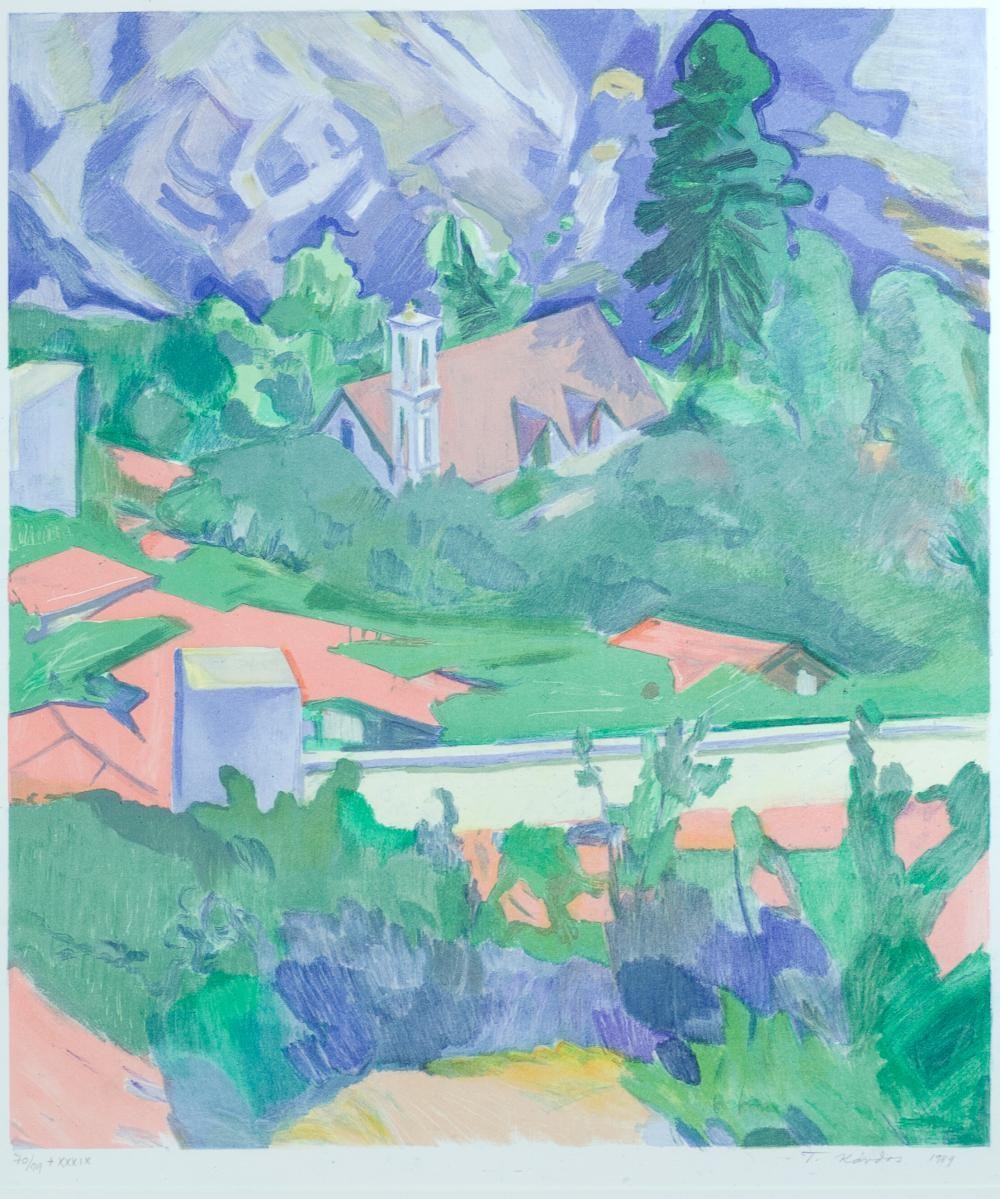
  • Prints
  • Lithographs
  • Multiples

Suitable for emerging collectors but generally not associated with substantial capital appreciation.


Auction Records

According to available international databases, the highest recorded auction result is for the painting:

Alona

which sold for approximately US$42,455 in 2023.

Other notable works that have achieved strong auction prices include:

  • Houses in Avrilli
  • Houses Facing Fotistra
  • The Houses of the Priests Are in Ruins
  • Landscape
  • Kampos
  • Pallouriotissa

Current Market Prices (2025–2026)

Works on Paper and Watercolors

€3,000 – €8,000


Small Oil Paintings

€8,000 – €18,000


High-Quality Oil Paintings (1950–1970)

€15,000 – €35,000


Museum-Quality Works

€35,000 – €70,000+


Exceptionally Rare Works

€70,000 and above

Should a top-quality pre-1950 Alona painting with impeccable provenance appear on the market, a future auction price exceeding €100,000 would not seem unreasonable.


Institutional Collections Holding His Works

Kanthos' works are represented in some of the most important institutional collections in Cyprus:

  • Telemachos Kanthos Foundation
  • Leventis Gallery
  • Bank of Cyprus Cultural Foundation
  • Central Bank of Cyprus Art Collection
  • Hellenic Bank Cultural Centre
  • State Gallery of Contemporary Cypriot Art
  • Archbishop Makarios III Foundation
  • National Gallery of Greece

Who Are the "Systemic" Buyers?

Within the Cypriot art market, Kanthos is primarily collected by:

  • Major Cypriot families
  • Banking institutions and corporate collections
  • Foundations
  • Cypriot shipping magnates
  • Collectors building "Blue-Chip Cypriot Art Collections"

At the pinnacle of the Cypriot art market, Kanthos is generally ranked alongside:

  • Christoforos Savva
  • Adamantios Antoniades
  • Diamantis Diamantis
  • Michael Kassialos

Copies and Forgeries

Kanthos is among the most frequently forged Cypriot painters.

Collectors should pay particular attention to:

1. Signature

His signature evolved throughout different periods of his career.

Forgers typically imitate only one version of the signature.


2. Provenance

Collectors should request:

  • Original invoices or receipts
  • Photographs from previous collections
  • Certificates of authenticity
  • Exhibition references and catalogues

3. Canvas and Materials

Many counterfeit works appear on modern canvases and utilize pigments unavailable during the artist's lifetime.


4. Subject Matter

Forgers often copy:

  • Villages
  • Cypress trees
  • Traditional houses

However, they rarely succeed in reproducing the distinctive structural quality of Kanthos' drawing and composition.


Personal Investment Assessment

If I were allocating capital to Cypriot art today, I would prioritize the following categories:

  1. Alona works (1935–1955)
  2. Fotistra works (1940–1965)
  3. Large Pitsilia landscapes
  4. Paintings from the 1974–1978 period
  5. Portraits of villagers created before 1955

These categories combine:

  • Historical significance
  • Rarity
  • Museum-quality artistic merit
  • The highest probability of long-term value appreciation

As a result, they represent what I consider the strongest long-term investment opportunities within the market for Cypriot art.